Principle Lab
Garlic-Infused Pan Oil
Jump to Recipe ↓The Principle
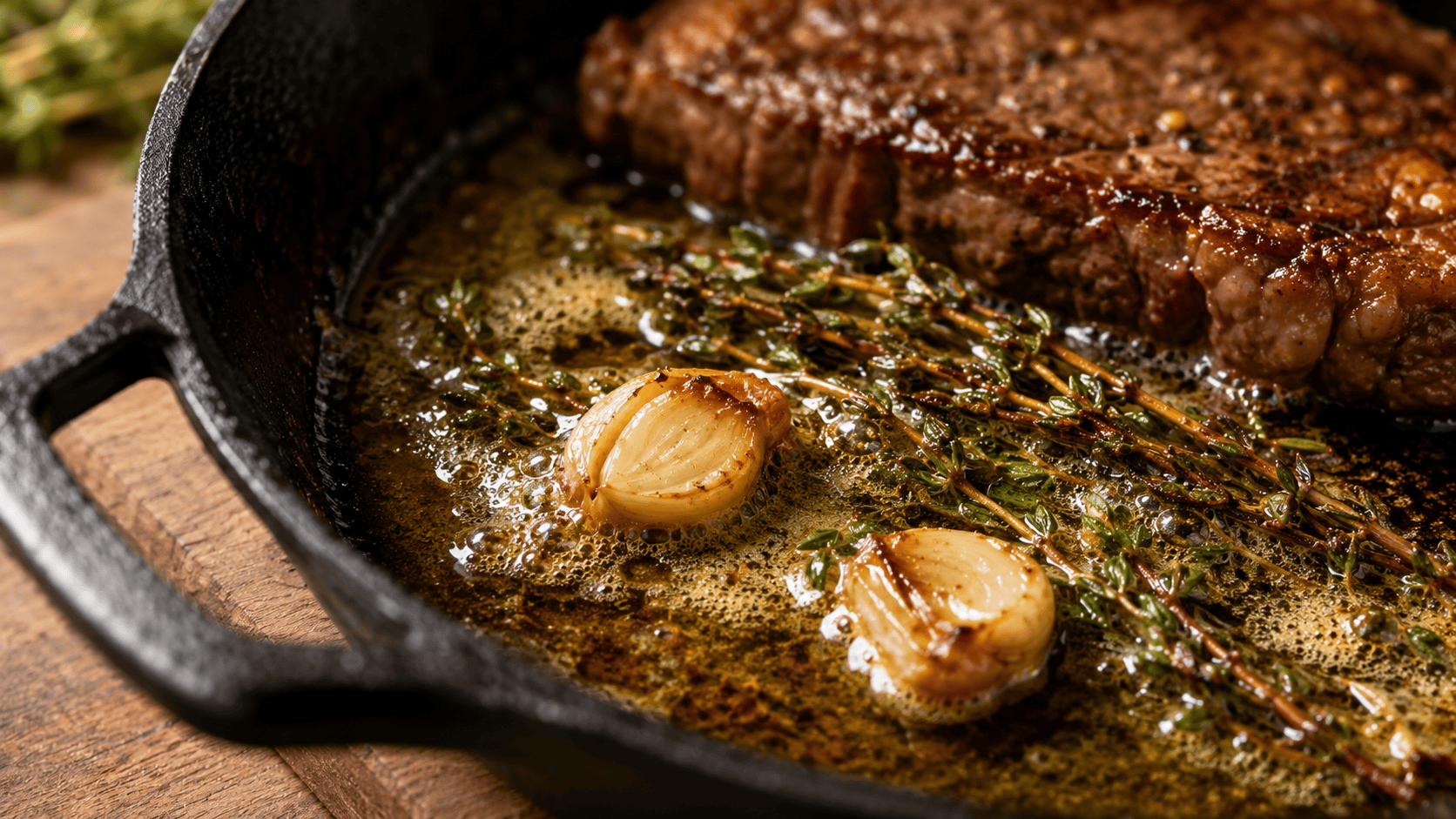
Garlic burns at roughly 300°F. Maillard browning happens at 280°F and up. Add garlic too early and it burns before the crust forms. Add it at the end with butter to infuse without scorching.
What You Need
Structure
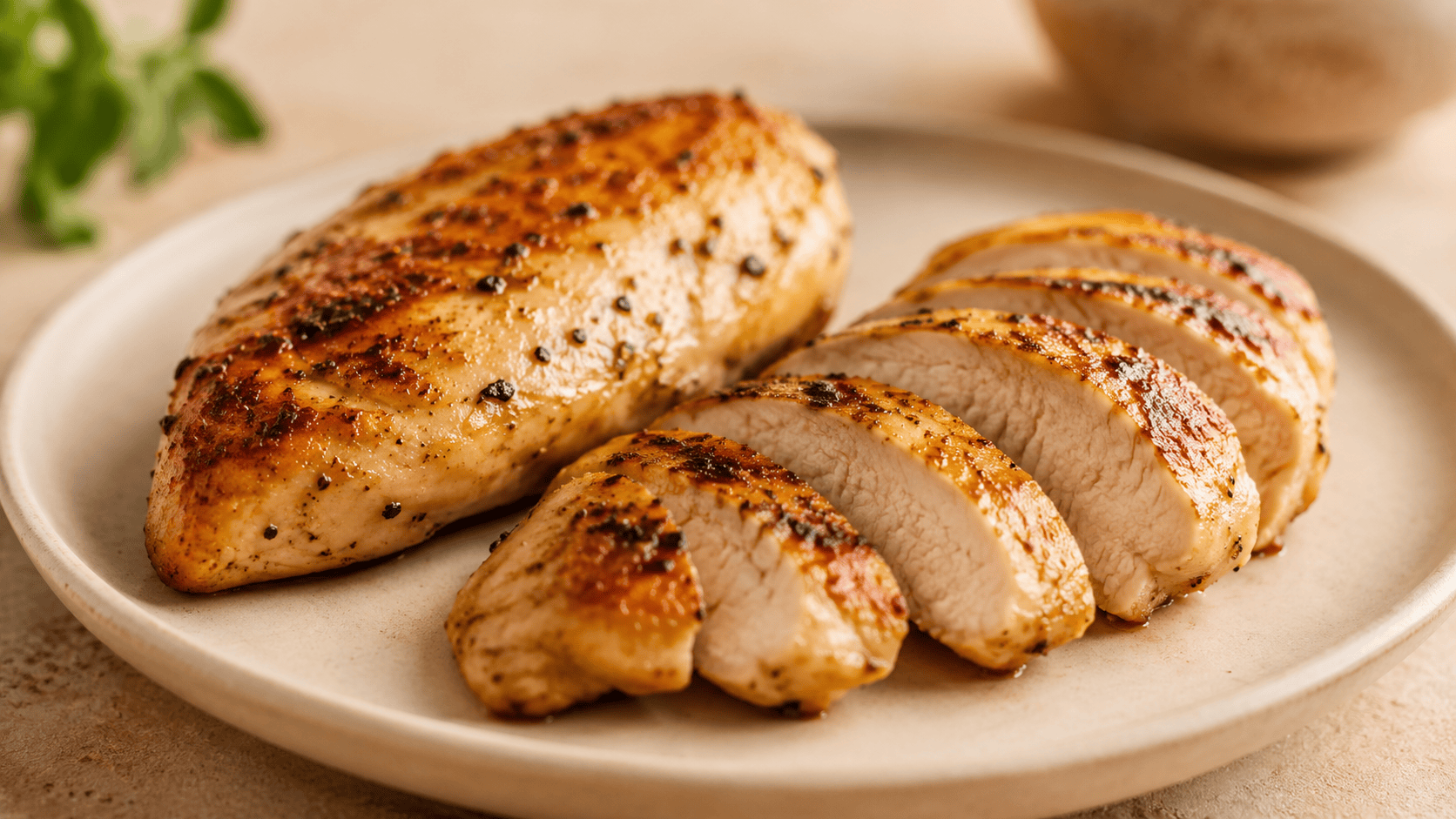
- 1 thick-cut steak, chicken breast, or pork chop (about 10 to 12 oz. This technique works for any pan-seared protein.)
The Sear
- 1 tbsp neutral oil (avocado or canola)
- Kosher salt
The Aromatics
- 2 garlic cloves, smashed (smashed, not minced. Minced garlic has more surface area and burns faster.)
- 2 sprigs fresh thyme or rosemary
The Finish
- 1 tbsp butter
Method
-
Salt the protein at least 40 minutes before cooking. Pat completely dry before it hits the pan.
WhyDry surface equals Maillard reaction. Any surface moisture must boil off at 212°F before the surface can reach the 280°F needed for browning. Salt timing from the 40-Minute Salted Steak recipe.
-
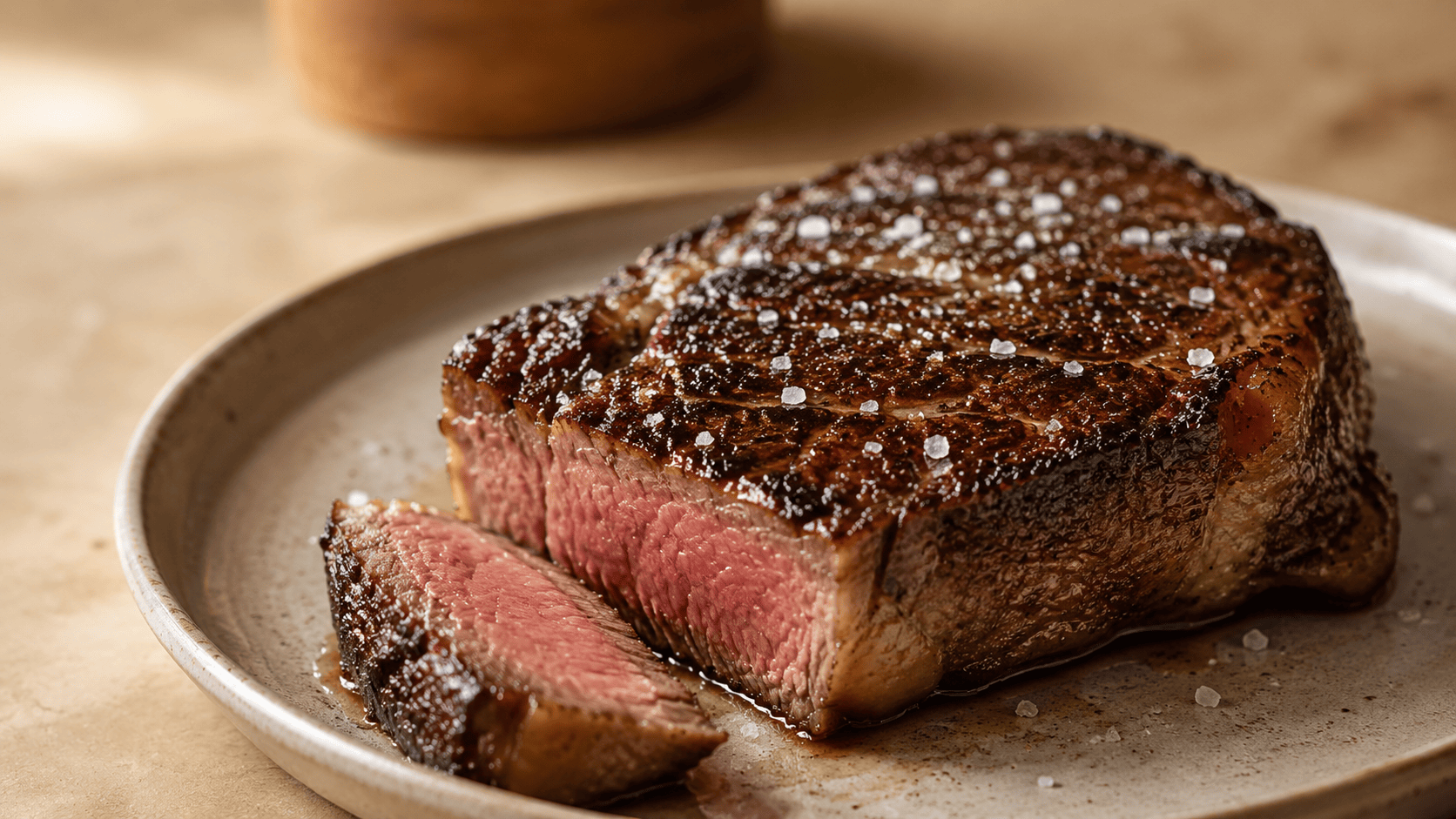
Heat oil in a heavy pan over medium-high until shimmering. Sear the protein 3 to 4 minutes per side without moving it.
WhySustained contact builds crust. Moving the protein interrupts the Maillard reaction. The shimmer means the oil is at roughly 350°F, hot enough for browning.
-
When the protein is about 30 seconds from done on the second side, reduce heat to medium-low. Add garlic, herbs, and butter to the pan.
WhyThis is the timing principle. Garlic burns above 300°F. Reducing the heat and adding butter drops the pan temperature below garlic's burn point. The butter picks up garlic and herb compounds and bastes them onto the crust.
-
Tilt the pan and spoon the infused butter over the protein for 30 to 60 seconds. The garlic should turn golden, not black.
WhyGolden garlic means the aromatic compounds have infused into the butter without burning. Black garlic is acrid and bitter. The sulfur compounds have broken down into unpleasant flavors.
-
Pull the protein. Rest on a warm plate. Spoon the pan butter and aromatics over the top.
WhyResting lets protein fibers relax and reabsorb moisture. The infused butter finishes the dish.
What Can Go Wrong
Burnt garlic?
Added too early, while the pan was still at searing temperature.
Add garlic only after reducing heat and adding butter. The butter moderates the pan temperature.
No garlic flavor?
Garlic wasn't smashed enough, or heat was too low after reducing.
Smash garlic firmly with the side of a knife. More surface area equals more infusion.
Butter burned?
Pan was too hot when butter was added. Butter burns around 350°F.
Reduce heat before adding butter. If the pan is smoking, it's too hot for butter.
The Science Behind This Recipe
Cook This Next
You added garlic to the pan at the start of the sear. Thirty seconds later it was black. Bitter. Acrid. You had to wipe out the pan and start over.
Garlic burns fast because it has almost no thermal mass. A smashed clove is thin, with a large surface area relative to its volume. It’s mostly water and sugar, and the sugars burn at around 300°F. Your searing pan is at 350°F or higher. The garlic never stood a chance.
The fix isn’t to add garlic later by a clock. It’s to add garlic when the pan temperature drops below garlic’s burn point. That happens naturally when you reduce the heat and add butter at the end of the sear. Butter moderates the pan temperature. The garlic infuses into the butter instead of scorching onto the pan.
This is the same principle that makes restaurant pan sauces work. The fond builds during the high-heat sear. The aromatics go in after the heat drops. The timing isn’t about minutes. It’s about temperature windows.
Before You Start
Read Maillard vs Caramelization to understand the difference between the two browning reactions. Maillard needs protein. Caramelization needs only sugar. Garlic burns because its sugars caramelize and then scorch at temperatures well below the Maillard window.
Read Why Your Steak Isn’t Browning to understand surface moisture, pan temperature, and what’s actually preventing your crust. The first step of this recipe, patting the protein dry, does more for your crust than any amount of heat.
Better cooking starts
with understanding.
One cooking problem at a time, explained clearly.
Follow @betterbitelab