Principle Lab
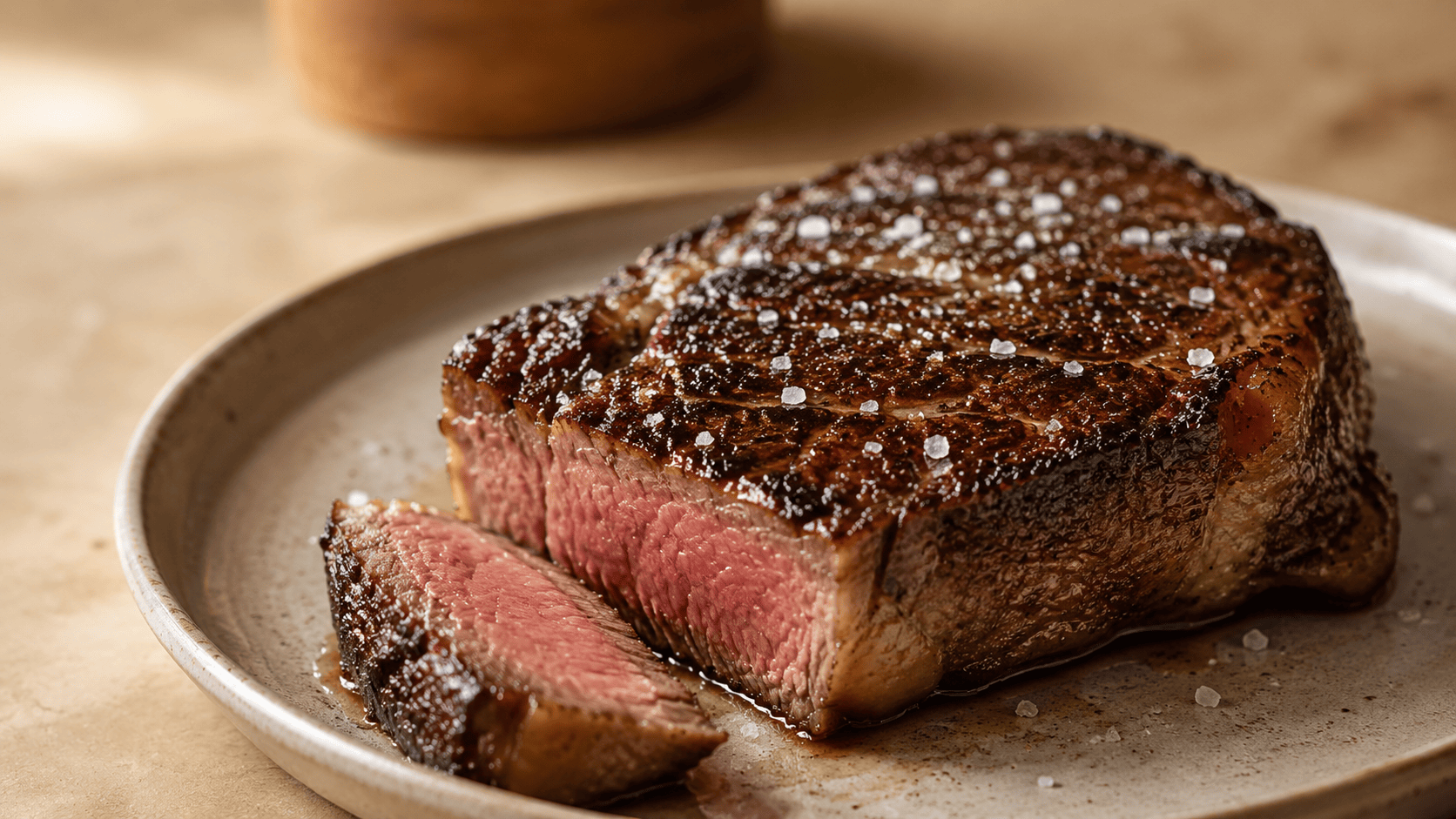
40-Minute Salted Steak
Jump to Recipe ↓The Principle
Salt does three completely different things depending on when you add it. Salt 40+ minutes before cooking and the dissolved proteins re-form into a gel that holds moisture inside. Salt right before and nothing happens. Salt 5 to 40 minutes before and it's drier than unsalted.
What You Need
Structure
- 2 strip or ribeye steaks (1-inch thick, about 10 to 12 oz each)
The Season
- 1 tsp kosher salt per steak (Diamond Crystal. If using Morton's, use half.)
The Sear
- 1 tbsp neutral oil (avocado or canola)
Flavor Support
- Fresh cracked black pepper (after cooking. Pepper burns during the sear.)
- 1 garlic clove, smashed
- 2 sprigs fresh thyme
- 1 tbsp butter (for basting, optional)
Method
-
Pat steaks completely dry. Salt generously on all sides, about 1 tsp per steak. Place on a wire rack over a sheet pan. Refrigerate uncovered for at least 40 minutes. Overnight is even better.
WhySalt first draws moisture out through osmosis. After roughly 40 minutes, the dissolved salt and meat proteins re-form into a gel that traps moisture inside. This is dry brining. The uncovered fridge dries the surface, which means a better crust.
-
Remove steaks from the fridge. Pat dry again. The salt will have drawn some moisture to the surface.
-
Heat a heavy pan (cast iron or carbon steel) over medium-high until very hot. Add oil. Wait for the shimmer.
WhyShimmer means the oil is roughly 350°F. Hot enough for Maillard browning without burning the oil. If you see smoke, the oil is breaking down into bitter compounds. Pull the pan and start over.
-
Place steaks in the pan. Don't touch them for 3 to 4 minutes. Flip once. Cook second side for 3 to 4 minutes.
WhySustained contact with the hot pan builds the crust. Moving the steak interrupts browning. The Maillard reaction needs sustained heat at the surface.
-
Check the temperature. Pull at 120 to 125°F for medium rare. Carryover cooking will take it to 130 to 135°F.
WhyCarryover cooking adds 5 to 10°F after the steak leaves the pan. Pull early. If you wait until it reads 130°F in the pan, you're heading toward medium-well.
-
Rest on a warm plate, tented loosely with foil. 5 to 10 minutes. Slice against the grain.
WhyResting lets the protein fibers relax and reabsorb moisture. Cut immediately and the juice floods the board. Wait and it stays in the meat.
What Can Go Wrong
No crust?
The surface wasn't dry, or the pan wasn't hot enough.
Pat the steak bone-dry. Wait for the oil shimmer before adding the meat.
Dry steak?
You salted in the 5 to 40 minute window. At that point, salt has drawn moisture out but hasn't had time to reabsorb.
Salt 40+ minutes before cooking, or right before it hits the pan. Nothing in between.
Gray band under the crust?
The pan was too hot, or you flipped too often.
Medium-high heat. One flip.
The Science Behind This Recipe
Cook This Next
You salted your steak. You probably did it sometime between walking in the door and getting the pan hot. Maybe 10 minutes before. Maybe 20.
Your steak was fine. Good, even. But it could have been great. And the difference between fine and great is a 40-minute window that most people don’t know exists.
Salt does three completely different things to steak depending on when you add it. Right before cooking: the salt sits on the surface, seasons the crust, and nothing else changes. It’s fine. Five to 40 minutes before cooking: salt pulls moisture to the surface through osmosis, but the dissolved proteins haven’t had time to reabsorb. The surface is wet. The interior is drier than if you’d done nothing. This is the worst window. Forty minutes or more: the salt draws moisture out, dissolves into it, then the protein-rich brine reabsorbs deep into the meat. The dissolved proteins restructure into a gel that holds moisture during cooking. The surface dries in the fridge, which means a better crust.
This is dry brining. It’s the single highest-impact thing you can do to a steak that costs nothing and requires no equipment. Just time.
Three windows. Two work. One makes it worse. Most people salt in the bad one without knowing it.
Before You Start
Read When to Salt Steak for the full breakdown on the three salt windows and exactly what’s happening at the protein level during each one. This recipe puts that article into practice.
Read Searing Does Not Lock in Juices to understand why you’re searing for flavor, not moisture. The crust is Maillard chemistry. The juiciness is salt timing and resting.
Read Why Resting Meat Works to understand what happens inside the meat after it leaves the pan. You’ll pull at 120°F and the steak will finish itself on the plate.
If you’ve got a thermometer, kosher salt, and 40 minutes, you’ve got everything you need for the best steak you’ve ever made at home.
Better cooking starts
with understanding.
One cooking problem at a time, explained clearly.
Follow @betterbitelab