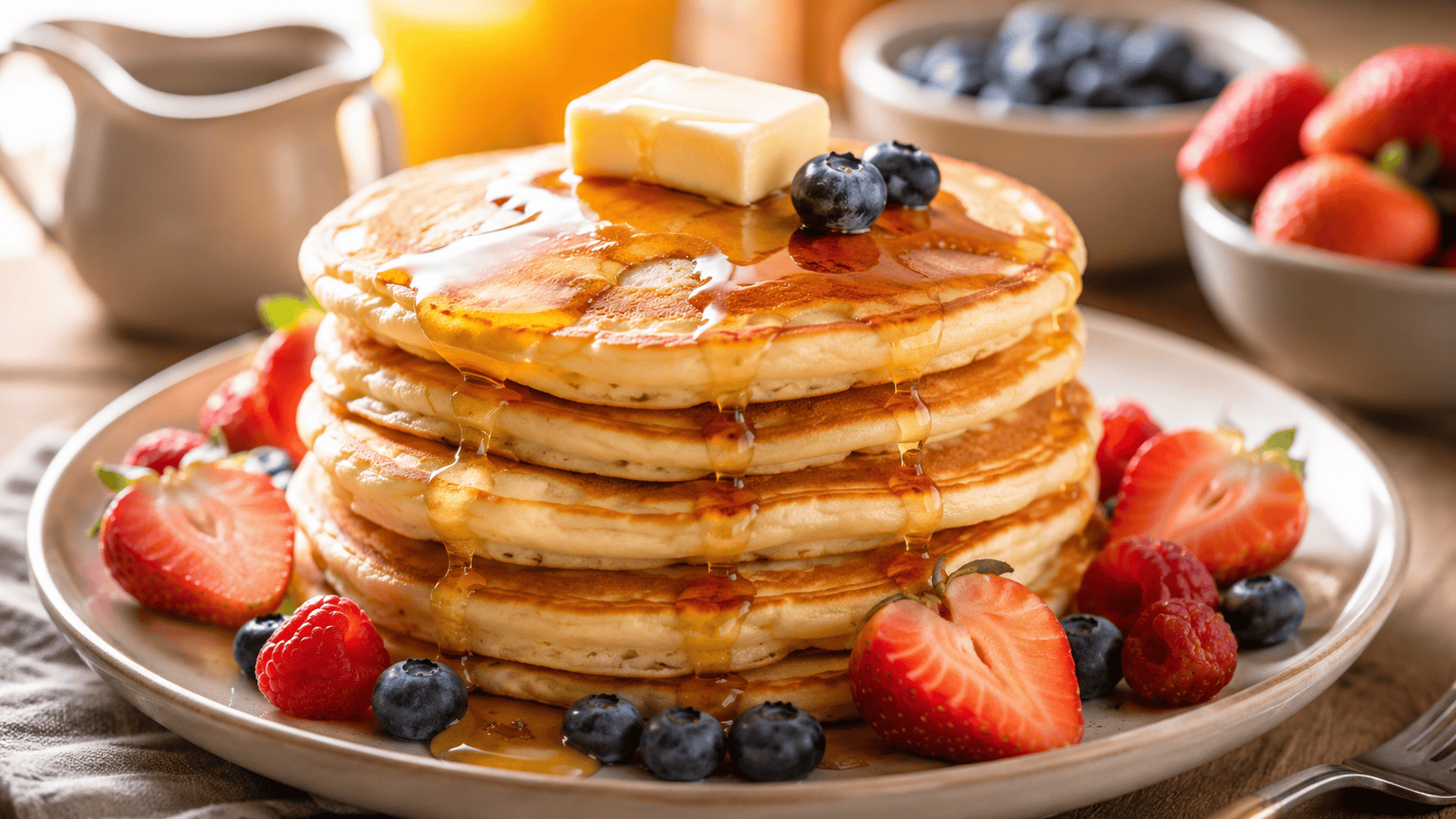
You stirred your pancake batter until it was perfectly smooth. No lumps. No streaks. The kind of batter that looks like it belongs in a cooking show.
Then your pancakes came out dense and chewy. Not light. Not fluffy. You could practically bounce one off the counter.
The problem wasn’t your recipe. It wasn’t your griddle. You overmixed. And those lumps you were trying to eliminate were actually doing you a favor.
What’s Happening in the Bowl
Flour contains two proteins: glutenin and gliadin. On their own, they sit there doing nothing. But add water and start stirring, and something changes. The two proteins link together and form gluten.
Gluten is what gives bread its chewy, elastic structure. It’s essential for pizza dough, bagels, and crusty loaves. Those foods need a strong gluten network to trap gas and hold their shape.
Pancakes are not bread. Pancakes need tenderness, not chew. Every stir of the bowl builds more gluten. Stir until the batter is perfectly smooth and you’ve accidentally built a gluten network strong enough for a bagel.
That’s why your pancakes came out tough.
The Lump Rule
Good pancake batter should still have visible lumps when it hits the griddle. Small ones. The kind that make you want to stir just a little bit more.
Here’s what’s actually in those lumps: pockets of dry flour that haven’t been overworked yet. They’re not a problem. They dissolve naturally during cooking as the batter heats up. By the time the pancake is done, the lumps are gone. But the gluten network never had a chance to overdevelop.
Ten to fifteen seconds of mixing is enough. Just until the dry ingredients disappear into the wet. Stop while it’s still lumpy. Walk away.
The Rest Step
Let the batter sit for 5 minutes before you ladle it onto the griddle. Don’t stir it again. This rest does two things:
First, it gives the flour time to fully hydrate. Water needs a few minutes to work its way into every flour particle. Hydrated flour cooks more evenly.
Second, any small lumps dissolve on their own during the rest. You don’t need to stir them out. Time handles it.
The Fix for Fluffy Pancakes
1. Mix wet into dry. Pour your wet ingredients into the dry, not the other way around. This distributes everything faster with less stirring.
2. Ten to fifteen seconds with a fork. Stop the moment the dry disappears. The batter should look lumpy and slightly shaggy. That’s exactly what you want.
3. Rest for 5 minutes. Set a timer. Walk away. Do not stir again. The lumps dissolve while you wait.
4. Ladle onto a hot griddle. Medium heat. Butter or oil. Look for bubbles forming on top and edges that look set before flipping. Flip once.
Your Pancake Checklist
- ☐ Wet into dry, not dry into wet
- ☐ Fork or whisk, 10 to 15 seconds
- ☐ Stop while batter is still very lumpy
- ☐ Rest 5 minutes. Don’t stir again.
- ☐ Ladle onto hot griddle. Flip once.
Save this for your next Saturday morning. Send it to someone who treats pancake batter like cake batter.
Cook the Principle
Put this into practice.
Lumpy-Batter Pancakes — 20 min · Beginner