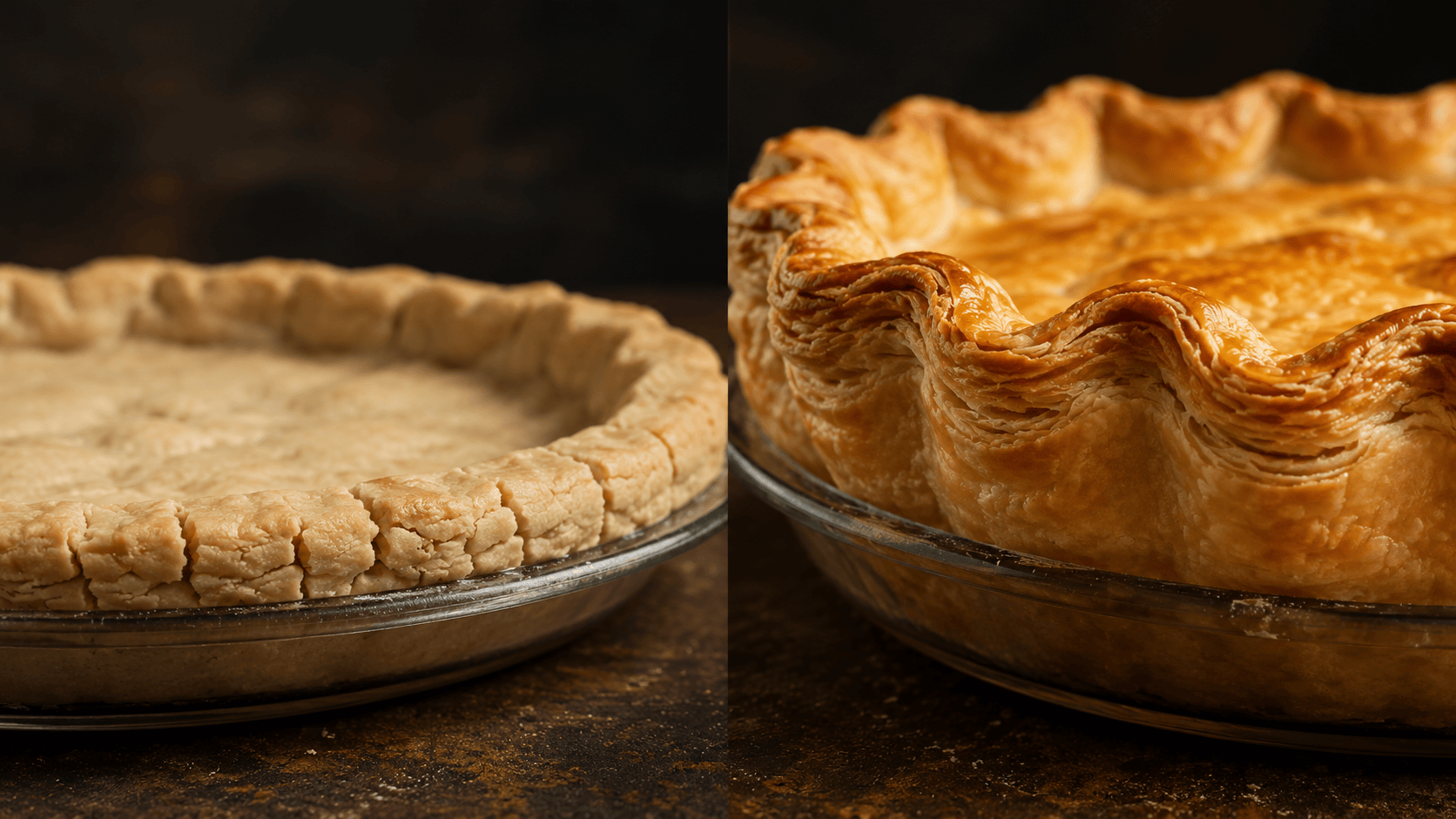
You found an old recipe card in your grandmother’s handwriting. The pie crust recipe calls for a tablespoon of vinegar. You assumed it was a mistake. Vinegar in pie crust? It sounds wrong. It tastes wrong. Vinegar is for salad dressing, not pastry.
But your grandmother was right. Vinegar makes a more tender, flakier pie crust. Not in a detectable way — you do not taste vinegar in the finished pie. You taste a crust that shatters instead of bending. Here’s the science your grandmother knew without knowing she knew it.
What Gluten Does to Pie Crust
Gluten is a protein network that forms when flour, water, and motion come together. In bread, gluten is essential. It traps gas, creates structure, and gives bread its chew. In pie crust, gluten is the enemy. You want tenderness, not chew. Flakes, not elasticity.
Every time you add water to flour and mix, you are building gluten. The more you mix, the more gluten forms. A pie crust that is overworked becomes tough because you have built a gluten network strong enough for bread in something that is supposed to crumble.
How Vinegar Interferes
Gluten formation is pH-sensitive. Gluten develops most readily in a neutral to slightly alkaline environment. Acid lowers the pH and interferes with the bonds that form between glutenin and gliadin — the two proteins that link up to form gluten.
A tablespoon of vinegar in the dough does not stop gluten formation entirely. But it slows it down. It gives you a wider margin of error. The dough can be handled a little more, rolled a little more, without turning into a tough, chewy crust.
The vinegar also contributes a small amount of liquid to the dough. Since vinegar is only about 5% acetic acid and 95% water, most of what you are adding is just water in a slightly acidic package. You may need slightly less water than a recipe without vinegar calls for.
Does It Taste Like Vinegar
No. The vinegar is present in such a small amount relative to the flour and butter that it is undetectable in the finished crust. During baking, the acetic acid volatilizes and the small amount that remains is overwhelmed by the butter and flour flavors. What you taste is tender, flaky pastry. What you do not taste is vinegar.
The Fix
1. Use one tablespoon per crust. White vinegar or apple cider vinegar. Both work. The flavor difference is undetectable.
2. Add it with the ice water. Mix the vinegar into your measured ice water before adding it to the flour. It distributes more evenly this way.
3. Reduce the water slightly. The vinegar is mostly water. If your recipe calls for 4 tablespoons of ice water, use 1 tablespoon of vinegar plus 3 tablespoons of ice water.
4. Don’t skip the cold butter. Vinegar helps with tenderness, but flakes still come from solid butter pieces creating steam pockets. Vinegar is an insurance policy, not a replacement for proper technique.
Your Vinegar Pie Crust Checklist
- ☐ 1 tbsp vinegar per single crust
- ☐ Mix vinegar into ice water before adding
- ☐ Reduce water slightly to account for vinegar
- ☐ Vinegar is insurance, cold butter is the real work
- ☐ No, you won’t taste it
Your grandmother was right. Vinegar makes better pie crust. Science has her back.