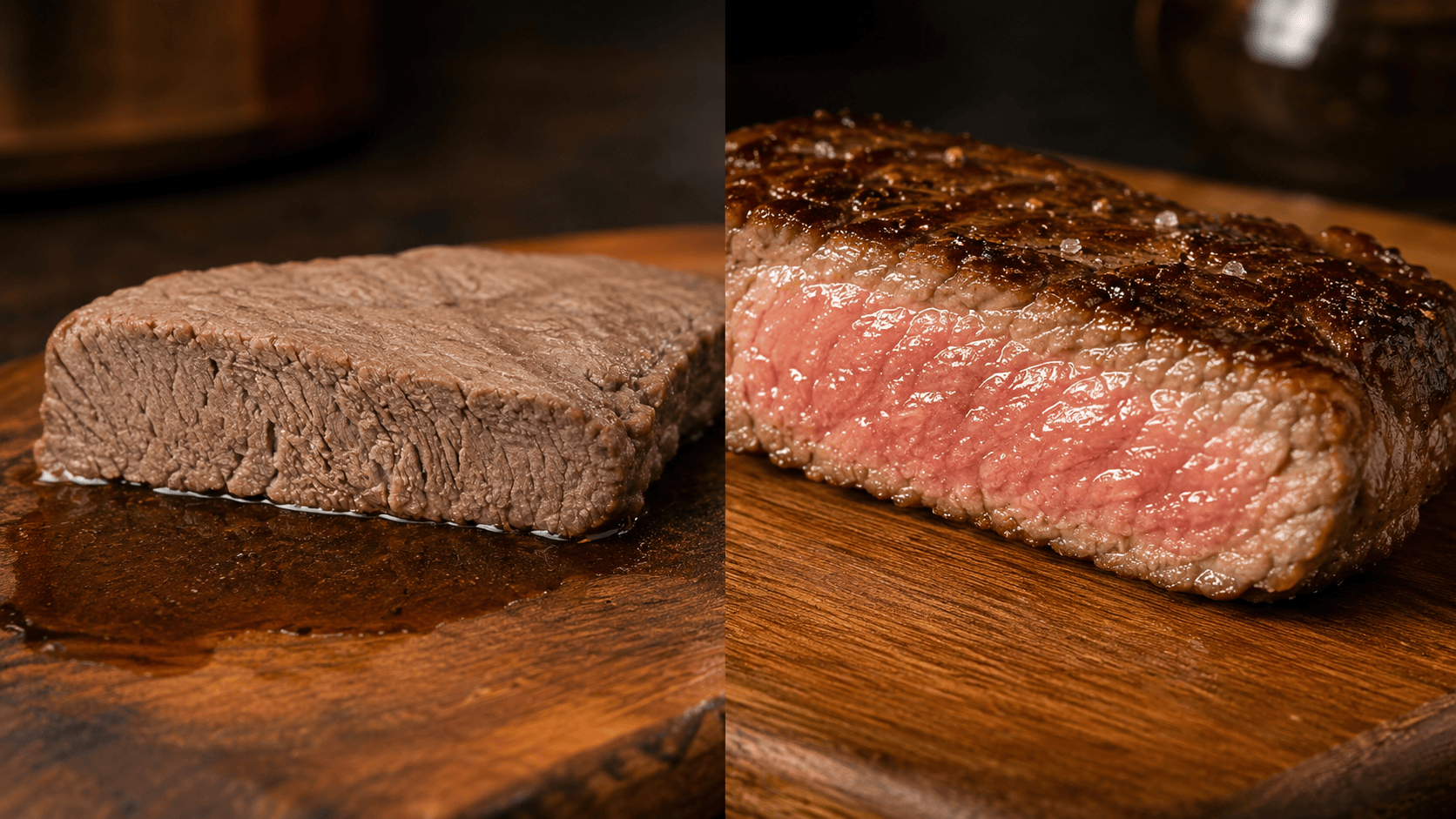
Salt dries things out. That’s what everyone learns. Salt on a slug. Salt on a sidewalk in winter. Salt pulling water out of vegetables. So when someone tells you to salt your steak an hour before cooking to make it juicier, it sounds backwards.
But it’s true. Salt can make meat juicier. It can also make it drier. The difference is time. Here’s why.
The Two Phases of Salting Meat
Phase one: osmosis (0 to 10 minutes). Salt on the surface of meat draws water out through osmosis. The meat looks wet. If you cook it now, that surface moisture has to boil off before browning can begin. The steak steams instead of sears. This is salting at its worst.
Phase two: protein restructuring (40+ minutes). Given enough time, the salt dissolves into the moisture on the surface and begins to diffuse into the meat. The salt ions interact with the muscle proteins, partially unraveling them. The unraveled proteins can now hold more water than they could before. The meat actually gains moisture-holding capacity.
At the same time, the surface dries out. The moisture that was drawn out in phase one evaporates or gets reabsorbed. The surface is now dry and ready to sear. The interior is now seasoned and more capable of holding onto its juices during cooking.
The Timing Rule
Salt right before cooking: wet surface, bad sear, dry interior. Salt 40 minutes to 2 hours before cooking: dry surface, good sear, juicy interior. Salt overnight in the fridge: the best of all. The fridge air dries the surface further while the salt penetrates deeply.
How Much Salt
More than you think. A steak needs roughly 1% of its weight in salt. That’s about one teaspoon of kosher salt per pound of meat. Table salt is denser — use half as much. The salt should be visible on the surface when you apply it. Most of it falls off or dissolves into the pan.
The Fix
1. Salt early. Forty minutes minimum. Overnight is better. Salting right before cooking is the worst of both worlds.
2. Use kosher salt. The flakes are larger and distribute more evenly. Table salt is too fine and easy to overdo.
3. Salt from high up. Hold your hand 8 to 10 inches above the meat. The salt spreads more evenly than if you sprinkle from close range.
4. Let it rest uncovered in the fridge. Air circulation dries the surface. A dry surface sears better than a wet one.
Your Salting Checklist
- ☐ Kosher salt, not table salt
- ☐ 1 tsp per pound of meat
- ☐ 40 minutes minimum rest time
- ☐ Uncovered in the fridge
- ☐ Surface should be dry before cooking
Salt does not dry meat out. Rushing does.