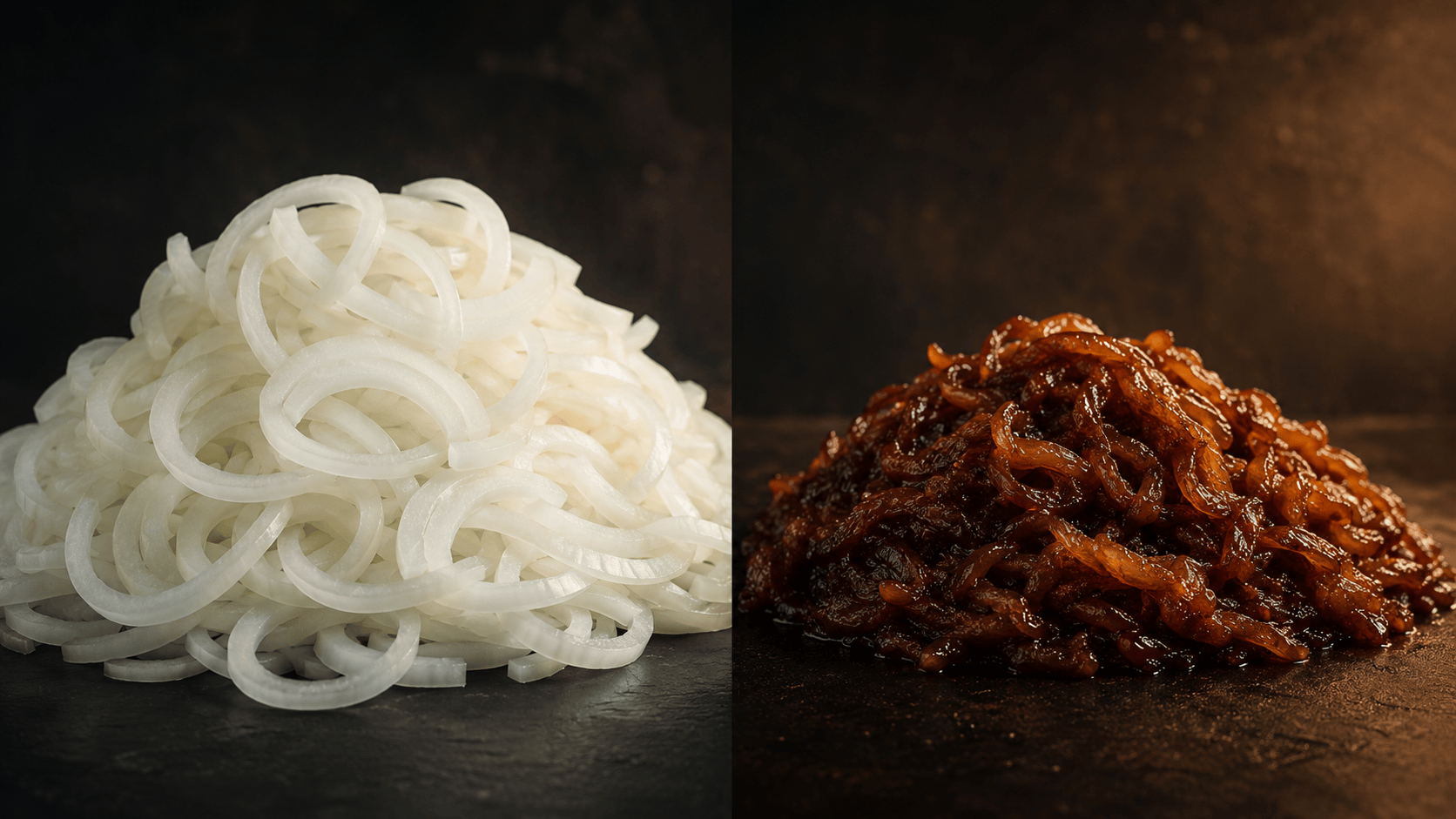
Every recipe that calls for caramelized onions lies to you. “Caramelize the onions, 5 to 7 minutes.” It takes 30 to 45. Sometimes longer. And half the attempts end with burned onions and a pan that needs soaking overnight.
The lie has persisted for decades. Cookbook authors, food magazines, recipe sites — they all pretend caramelized onions are fast. They are not. But the reason they’re not is what makes them so good.
What’s Happening in the Pan
Caramelization is a chemical reaction. When sugar is heated, it breaks down into hundreds of new flavor compounds — buttery, nutty, slightly bitter, deeply sweet. Onions are full of natural sugars, mostly sucrose, glucose, and fructose. As those sugars caramelize, the onion transforms from sharp and sulfurous to rich and jammy.
The catch is temperature. Caramelization kicks in around 320°F (160°C), but sugars burn above 350°F (175°C). That window is narrow. Crank the heat to speed things up and the sugars on the outside of the onion hit the burn threshold while the inside is still raw. You get blackened edges and crunchy centers.
Low heat keeps the entire onion in the caramelization zone, not the burning zone.
Why Water Matters
Onions are mostly water. Before any browning can happen, that water has to cook off. This takes time and you cannot rush it. Every time you add heat, the onion releases more water. Stirring releases more water. The process is self-limiting — the heat can’t climb past 212°F until the water is gone.
Once the water is mostly gone, the temperature climbs into the caramelization zone. That’s when the color starts. Golden. Then amber. Then deep brown. Each stage adds more complexity.
The No-Shortcuts Truth
You can add a pinch of baking soda. It raises the pH and speeds browning. But it also turns the onions into mush. Good for an onion soup base. Bad when you want distinct strands.
You can add sugar. It makes the onions sweet but lacks the depth of real caramelization. You’re adding sweetness, not creating it.
You can deglaze with water. This is actually useful — when browned bits stick to the pan, a splash of water dissolves them back into the onions. But it adds time because you have to cook off the water again.
There is no shortcut that works as well as waiting.
The Fix for Perfect Caramelized Onions
1. Slice pole to pole. Cut the onion from root to stem. The slices hold their shape better during the long cook.
2. Low to medium-low heat. You want a gentle sizzle, not a sear. Butter, oil, or a mix of both.
3. Stir occasionally, not constantly. Every stir releases water and cools the pan. Stir when the bottom layer starts to deepen in color.
4. Deglaze with water. When brown fond builds up on the pan, add a tablespoon of water and scrape. The water cooks off quickly.
5. Wait for deep brown. Golden is 20 minutes. Amber is 30. Deep brown with jammy texture is 40 to 45. That’s the target.
Your Caramelized Onion Checklist
- ☐ Slice pole to pole
- ☐ Low heat, patience
- ☐ Stir occasionally, not constantly
- ☐ Deglaze with water when needed
- ☐ 30 to 45 minutes, no shortcuts
Caramelized onions are a test of patience. Pass it and they reward you with something no jarred product can match.