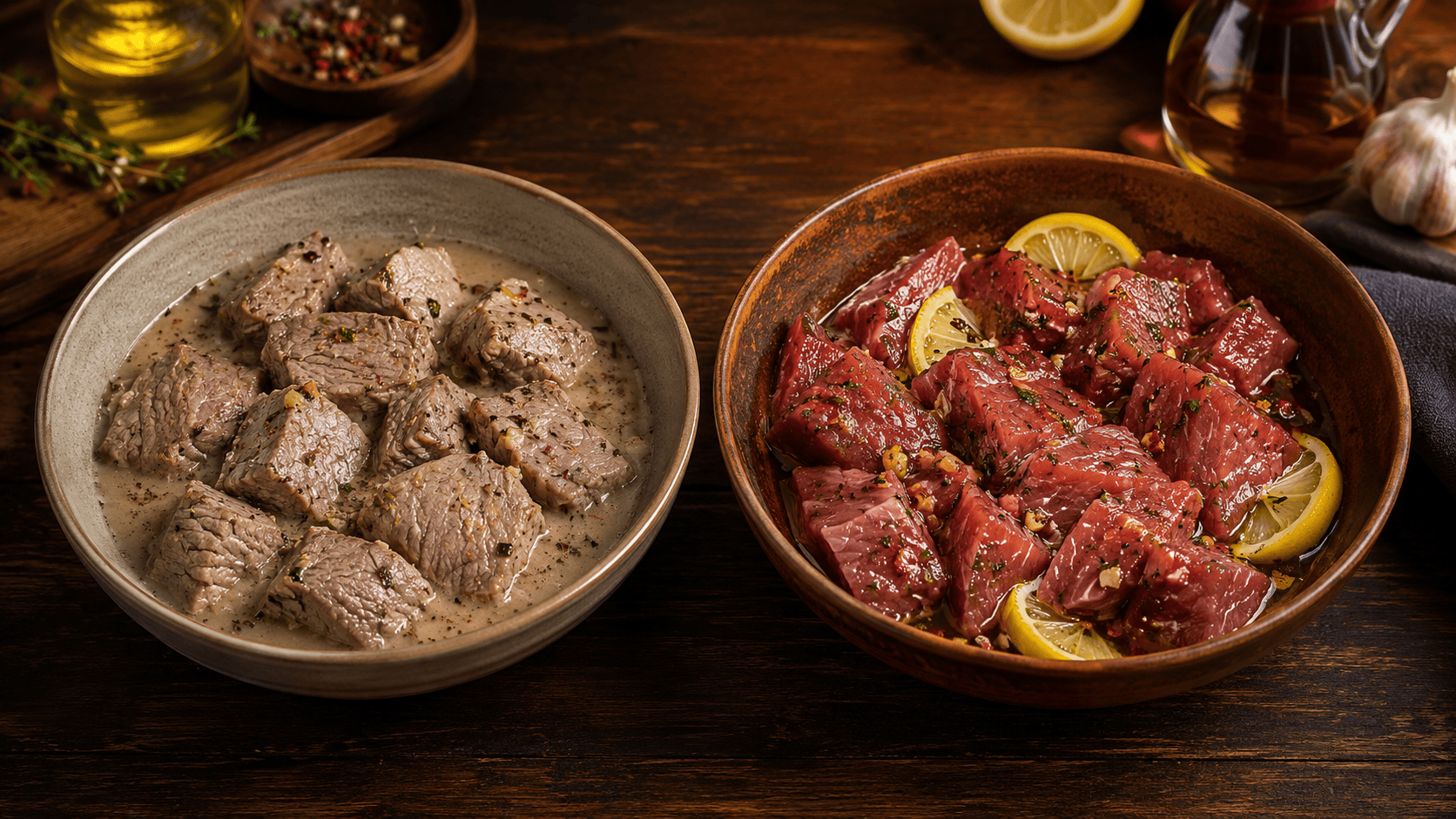
You added vinegar to your braise right at the start, just like the recipe said. But two hours later the carrots are still firm and the onions haven’t melted into the sauce the way you wanted.
The problem isn’t the amount of acid. It’s when you added it. Acid timing is one of the most overlooked variables in cooking, and getting it wrong can ruin a dish that has everything else going for it.
What Acid Does to Food
Acid does three things in the kitchen. It brightens flavor. It denatures proteins. And it slows the breakdown of plant cell walls.
That third one is the culprit. Vegetables soften during cooking because heat breaks down pectin and hemicellulose, the structural carbohydrates that hold plant cells together. But acid strengthens those same bonds. Add acid early in a long-cooked dish and you’ve essentially told your vegetables to stay firm — while heat is telling them to soften. The acid wins.
This is why beans cooked with tomato stay firm even after hours of simmering. The acid in the tomato interferes with the breakdown of the bean’s cell walls. That can be useful when you want beans to hold their shape. It is not useful when you want meltingly tender vegetables.
The Two Times to Add Acid
Late acid (brightness). This is the default. Add acid at the end of cooking when the vegetables are already as soft as you want them. Vinegar, lemon juice, lime juice — a splash right before serving wakes up every other flavor in the dish. The vegetables are already tender and the acid has nothing left to protect.
Early acid (structure). Sometimes you want vegetables to hold their shape. Pickling is the obvious example — acid from the start keeps pickles crisp. But it also applies to dishes where you want distinct vegetable pieces in a long-cooked sauce. If you’re making a stew with large carrot chunks and want them to stay intact, a small amount of acid early can help.
The Acid Timing Rule
The rule is simple. If you want soft vegetables, add acid at the end. If you want them to hold some bite, add a little at the start. Most of the time you want soft vegetables, so most of the time acid goes in last.
The Fix
1. Taste before you acid. Salt first. Then a small splash of acid. Taste again. You can always add more.
2. Use the right acid. Lemon for brightness, vinegar for depth, wine for complexity. Match the acid to the dish.
3. Wait until the end. Unless you specifically need structure, acid waits. The pot has been doing its job for an hour. Let the vegetables finish softening before you introduce acid.
Your Acid Timing Checklist
- ☐ Salt first, acid second
- ☐ Taste after each addition
- ☐ Late acid for tender vegetables
- ☐ Early acid only when you want structure
- ☐ Lemon = bright. Vinegar = deep. Wine = complex.
Acid is a finisher, not a starter. Let heat do its work first.